No Rules. Just Stories.
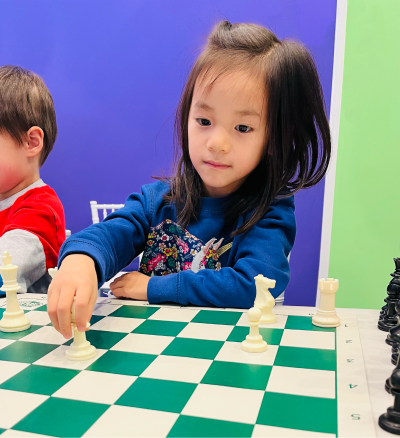
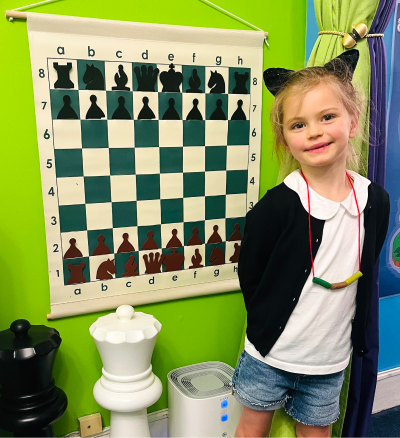
Chess@3's Curriculum is a collection of fun stories that teaches chess to 3-10 year olds. Before now, chess education traditionally began at 8 or as early as 7, Chess@3 gets 3 year olds, playing and loving chess.
These simple stories teach kids how to play chess without them knowing they're learning. The Rules of chess are usually too abstract for 3 year olds to grasp, there are too many of them, and some of the rules are too complicated. These stories give reasons why these rules in chess exist, Kings don't move one square at a time, they move slow. One king moves slow because his belly is so big, and one moves slow because he's afraid of everything. Kids just follow these memorable stories, and without knowing it, start to play chess.
Our teaching is done in three stages. Teaching Kids to:
- Make Legal Moves- For many kids this is very challenging, and can take the whole system to complete. But don't forget, chess is the hardest game in the world! If it takes a year of classes to get a 3 year old to make legal chess moves, this is a great success.
- Make Good Moves- Very quickly you'll see some kids who do not struggle with making legal moves. These kids then realize there are good moves, and bad moves. We want them to make more of the former, less of the latter.
- Make Their Own Moves- A chess game can be won many different ways, by attacking, by defending, Chess@3 gets kids to realize their style of thinking, and affirm it.
Learning chess this early gives increased mental dexterity to anyone who plays it. When you go to the gym you exercise muscles that wouldn't have been stimulated without the gym. Playing chess takes your mind to the gym, when you play chess, you work the muscles of your mind that you almost never do. Learning to control and build these powers has incredible use, particularly in music and math. Chess, music and math are all very similar, they're closed universes of possibility, numbers, notes, and moves. All three require you to mentally manipulate different variables, to produce different results, equations, songs, and games. Getting good at one gets you good at the other two. The mental dexterity gained by playing chess with Chess@3 will give anyone a 'head start' in music, math, and general concentration.